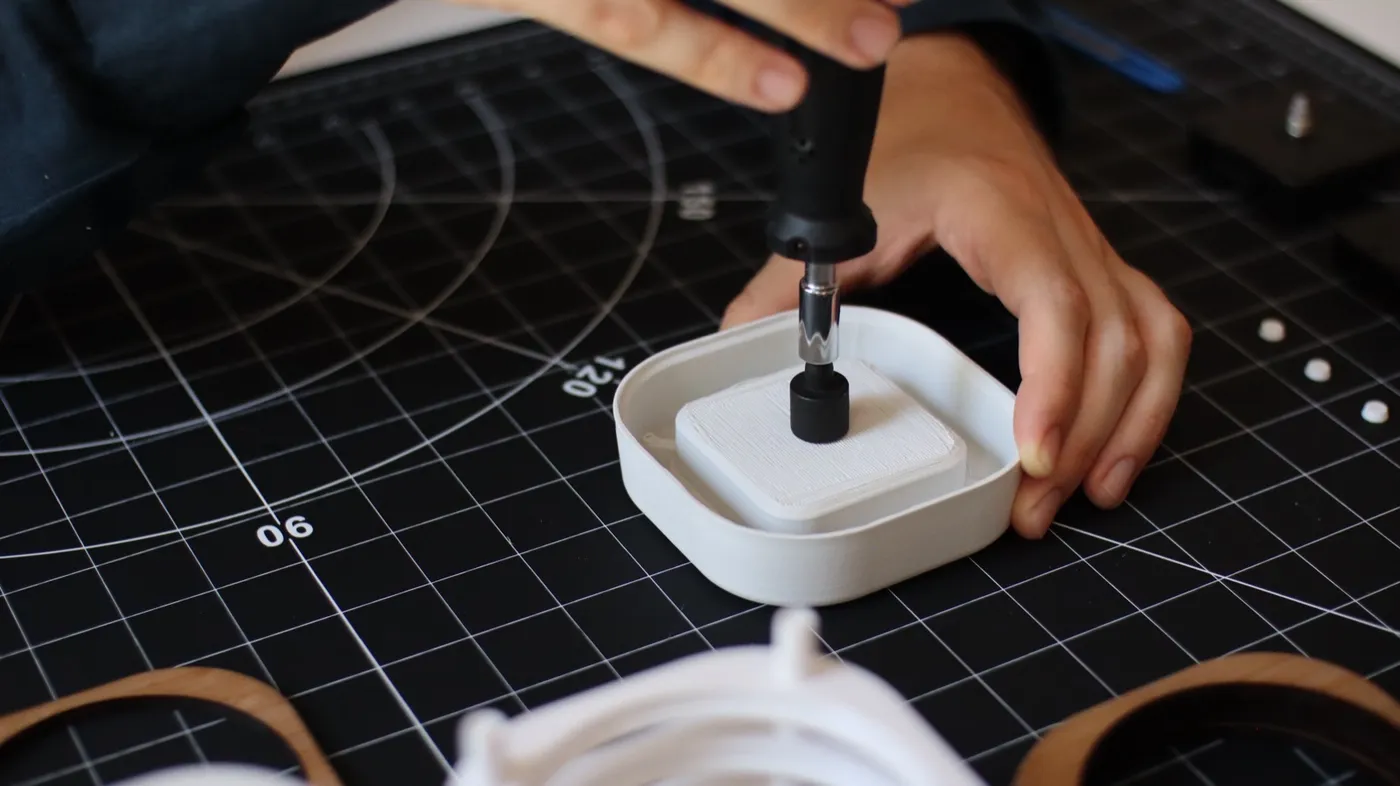
A technical idea can look very convincing on paper. You know the application, have a picture of the product in mind and expect customers to benefit from it. The harder question is how much of that story has already been demonstrated.
My advice is to get into the field early. Let people try something, watch how they use it and investigate which assumptions hold up. Your product does not have to be finished for this. You do, however, need to know what you want to learn from a test and which conclusions the results can support.
A good initial test helps you decide where to invest next. Sometimes it confirms the direction. Sometimes it shows that a change is needed before further development work makes sense.

Each test answers a different question. Clicks alone do not prove demand.
Choose the uncertainty that matters first
Technical and commercial questions overlap in a new product. Can the sensor take the required measurement? Does the user understand the application? Does the device fit into their daily routine? Is the problem important enough for someone to spend money on solving it?
These questions call for different tests. A conversation can help you understand a problem. Assessing measurement quality requires a technical experiment. To find out whether someone can install a product independently, you need to let them try.
Start by writing down what you do not yet know. Then decide which uncertainty has the greatest effect on your next investment. If the suitability of your sensing principle is in doubt, investigate that before spending much time on packaging.
Build enough to learn
An early test can use a limited version of the product. Development boards and a simple enclosure may be enough for a technical experiment. To investigate wearing comfort, a model without working electronics may be more useful.
The build needs to match the question. A large prototype might let you investigate an algorithm, but tell you little about the comfort of a small wristband. If a participant finds that prototype awkward, you need to understand whether their response concerns the concept or the temporary implementation.
Make the same distinction in your conclusions. Record what you tested, under which conditions and with what limitations. This prevents a successful demonstration from quietly becoming accepted as evidence that the whole product is ready.
Hand over the product and observe
If you want to know whether the controls make sense, give the product to someone in your target audience. Ask them to perform a specific task, such as installing it, pairing it or reading its data. Try not to step in every time they hesitate.
That is harder than it sounds. As the creator, you know where the button is and why a light is flashing. You want to explain that they should wait a moment or do something else first. Yet that hesitation is useful information. The eventual customer probably will not have you there to guide them either.
Watch where people get stuck, which steps they skip and when uncertainty arises. Afterwards, ask what they expected to happen. This gives you a clearer route to improvement than simply asking whether they like the product.
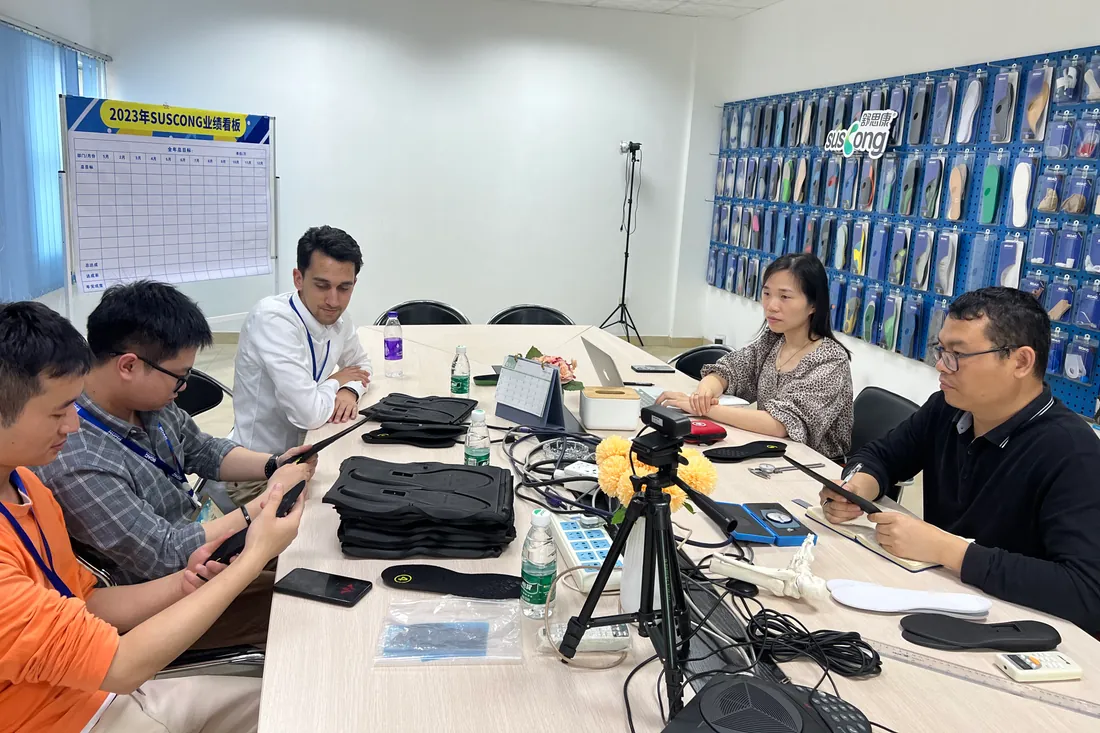
A design review is a starting point. User testing needs people to try the product themselves.
Look at use in the real environment
A demonstration at a table reveals only a small part of reality. Daily use may show that someone forgets to charge the product, does not know where to mount it or interprets notifications differently from what you intended.
Where it is appropriate to do so, give trial users time to try the product in their own circumstances. Ask about specific moments: when did it help, when did it get in the way and when was it left unused? A short evaluation form can help you compare responses from different people.
Also gather observations about the value it delivers. What decision could someone make because of the product? Which task became easier? This helps you assess whether you are solving the right problem and whether the chosen features contribute to that.
Explore demand before building a large batch
Alongside user testing, you can test the proposition with a simple landing page and an advertising campaign, for example on Instagram. Show who the product is for and which problem it solves. You can compare different applications or messages to see what attracts interest.
Be clear when something is still a concept. An ad click is also only an initial signal. A conversation with someone who recognises the problem provides different information from a casual like. Ultimately, you want to understand whether that interest remains when people see a realistic price and specific terms.
A campaign like this helps you have more focused conversations with potential customers. You still need to investigate technical feasibility, everyday use and actual sales alongside it.
Use feedback to make decisions
Not every suggestion needs to become a new feature. Some comments relate to a different audience. Others stem from an unclear explanation. Entrepreneurial judgement is still needed to decide which feedback fits the value you want to deliver.
Look for recurring problems and behaviour that challenges your assumptions. If several relevant users get stuck at the same step, that deserves attention. When someone requests an extra feature, ask which problem they are trying to solve. There may be a simpler solution.
After a round of testing, record what you have learned and which decision follows. You can continue, make an adjustment, run another test or stop. Begin with a small test that answers an important question. Repeat the process when new uncertainties arise. This gives each subsequent investment a stronger foundation.
Discuss your next step
Bring us the assumption you need to test. Our rapid prototyping service helps define a useful first build. Already using a development board? Read when to move from breadboard to PCB.
'%3e%3cpath%20d='M0.512578%2012.7977C0.512016%2014.8142%201.04302%2016.7831%202.0527%2018.5185L0.416016%2024.448L6.53152%2022.857C8.22299%2023.7706%2010.1181%2024.2494%2012.044%2024.2495H12.0491C18.4067%2024.2495%2023.582%2019.1162%2023.5847%2012.8067C23.586%209.74933%2022.3871%206.87435%2020.2089%204.71138C18.0311%202.54858%2015.1347%201.35686%2012.0486%201.35547C5.6902%201.35547%200.515297%206.48849%200.512672%2012.7977'%20fill='url(%23paint0_linear_1455_10349)'/%3e%3cpath%20d='M0.100313%2012.7941C0.0996563%2014.8831%200.649687%2016.9224%201.69537%2018.72L0%2024.8621L6.33478%2023.214C8.08022%2024.1582%2010.0454%2024.6561%2012.0451%2024.6568H12.0502C18.636%2024.6568%2023.9972%2019.3389%2024%2012.8035C24.0011%209.63629%2022.7591%206.65796%2020.5031%204.4175C18.2468%202.17731%2015.2468%200.942709%2012.0502%200.941406C5.46337%200.941406%200.102938%206.25862%200.100313%2012.7941ZM3.87291%2018.4104L3.63637%2018.0379C2.64206%2016.4691%202.11725%2014.6563%202.118%2012.7948C2.12006%207.36271%206.57544%202.94327%2012.054%202.94327C14.7071%202.94438%2017.2005%203.97062%2019.0759%205.83257C20.9512%207.69471%2021.9831%2010.1701%2021.9824%2012.8028C21.98%2018.2349%2017.5245%2022.6549%2012.0502%2022.6549H12.0463C10.2638%2022.654%208.51569%2022.179%206.99113%2021.2814L6.62831%2021.0679L2.86912%2022.0459L3.87291%2018.4104Z'%20fill='url(%23paint1_linear_1455_10349)'/%3e%3cpath%20d='M9.06383%207.83911C8.84014%207.34581%208.60473%207.33586%208.39202%207.32721C8.21783%207.31976%208.0187%207.32032%207.81977%207.32032C7.62064%207.32032%207.29711%207.39465%207.02364%207.69093C6.74989%207.98748%205.97852%208.70414%205.97852%2010.1617C5.97852%2011.6193%207.04848%2013.028%207.19764%2013.2259C7.34698%2013.4234%209.26323%2016.5103%2012.2981%2017.6978C14.8204%2018.6847%2015.3336%2018.4884%2015.881%2018.4389C16.4285%2018.3896%2017.6477%2017.7225%2017.8964%2017.0306C18.1453%2016.3389%2018.1453%2015.746%2018.0707%2015.6221C17.996%2015.4986%2017.7969%2015.4245%2017.4983%2015.2764C17.1997%2015.1283%2015.7317%2014.4115%2015.458%2014.3126C15.1843%2014.2138%2014.9853%2014.1645%2014.7861%2014.4612C14.587%2014.7573%2014.0152%2015.4245%2013.841%2015.6221C13.6669%2015.8201%2013.4926%2015.8448%2013.1941%2015.6966C12.8953%2015.5479%2011.9337%2015.2355%2010.7929%2014.2263C9.90523%2013.441%209.30598%2012.4712%209.1318%2012.1746C8.95761%2011.8784%209.11314%2011.7178%209.26286%2011.5702C9.39702%2011.4374%209.56155%2011.2242%209.71098%2011.0513C9.85986%2010.8783%209.90955%2010.7548%2010.0091%2010.5573C10.1088%2010.3595%2010.0589%2010.1865%209.98436%2010.0383C9.90955%209.89009%209.32933%208.42488%209.06383%207.83911Z'%20fill='white'/%3e%3c/g%3e%3cdefs%3e%3clinearGradient%20id='paint0_linear_1455_10349'%20x1='1158.85'%20y1='2310.61'%20x2='1158.85'%20y2='1.35547'%20gradientUnits='userSpaceOnUse'%3e%3cstop%20stop-color='%231FAF38'/%3e%3cstop%20offset='1'%20stop-color='%2360D669'/%3e%3c/linearGradient%3e%3clinearGradient%20id='paint1_linear_1455_10349'%20x1='1200'%20y1='2393.01'%20x2='1200'%20y2='0.941406'%20gradientUnits='userSpaceOnUse'%3e%3cstop%20stop-color='%23F9F9F9'/%3e%3cstop%20offset='1'%20stop-color='white'/%3e%3c/linearGradient%3e%3cclipPath%20id='clip0_1455_10349'%3e%3crect%20width='24'%20height='24'%20fill='white'%20transform='translate(0%200.941406)'/%3e%3c/clipPath%3e%3c/defs%3e%3c/svg%3e)