When your IoT prototype finally works, it's tempting to think the hard part is over. The sensors read correctly, the firmware behaves, data lands on your dashboard. That's a real milestone. It's also nowhere near the finish line.
To sell that product in Europe it has to clear a set of rules first, and carry the CE mark. CE means the device is safe, doesn't interfere with other electronics, and stays inside the environmental limits.
Plenty of startups find this out late, when changing the hardware is slow and expensive and the launch slips by months. That's why certification belongs in the plan during IoT product development, not after it.
If you're preparing a device for approval right now, our guide on CE certification for IoT devices goes deeper into the testing and the paperwork.
CE is a declaration, not a test you pass
People often picture CE as one exam at the end. It isn't. CE is your declaration that the product complies with several EU directives.
Which ones apply depends on the product. Most IoT devices land on three.
Radio Equipment Directive (RED)
Applies to anything with a radio in it: Wi-Fi, Bluetooth, LoRaWAN, cellular. It exists to keep devices using the spectrum properly and out of each other's way.
Electromagnetic Compatibility (EMC)
Your device has to keep working while surrounded by other electronics. EMC sets limits on how much interference it may emit, and how well it has to cope with the interference around it.
RoHS
The Restriction of Hazardous Substances directive limits what you can put in electronics: lead, mercury, cadmium, and certain flame retardants.
Between them, these three shape how a device is designed, tested and documented before it can go on sale.
Designing with compliance in mind
A prototype proves the idea works. A production device has to prove it works reliably and safely, batch after batch. That's a higher bar, and it's where a lot of IoT projects get into trouble.
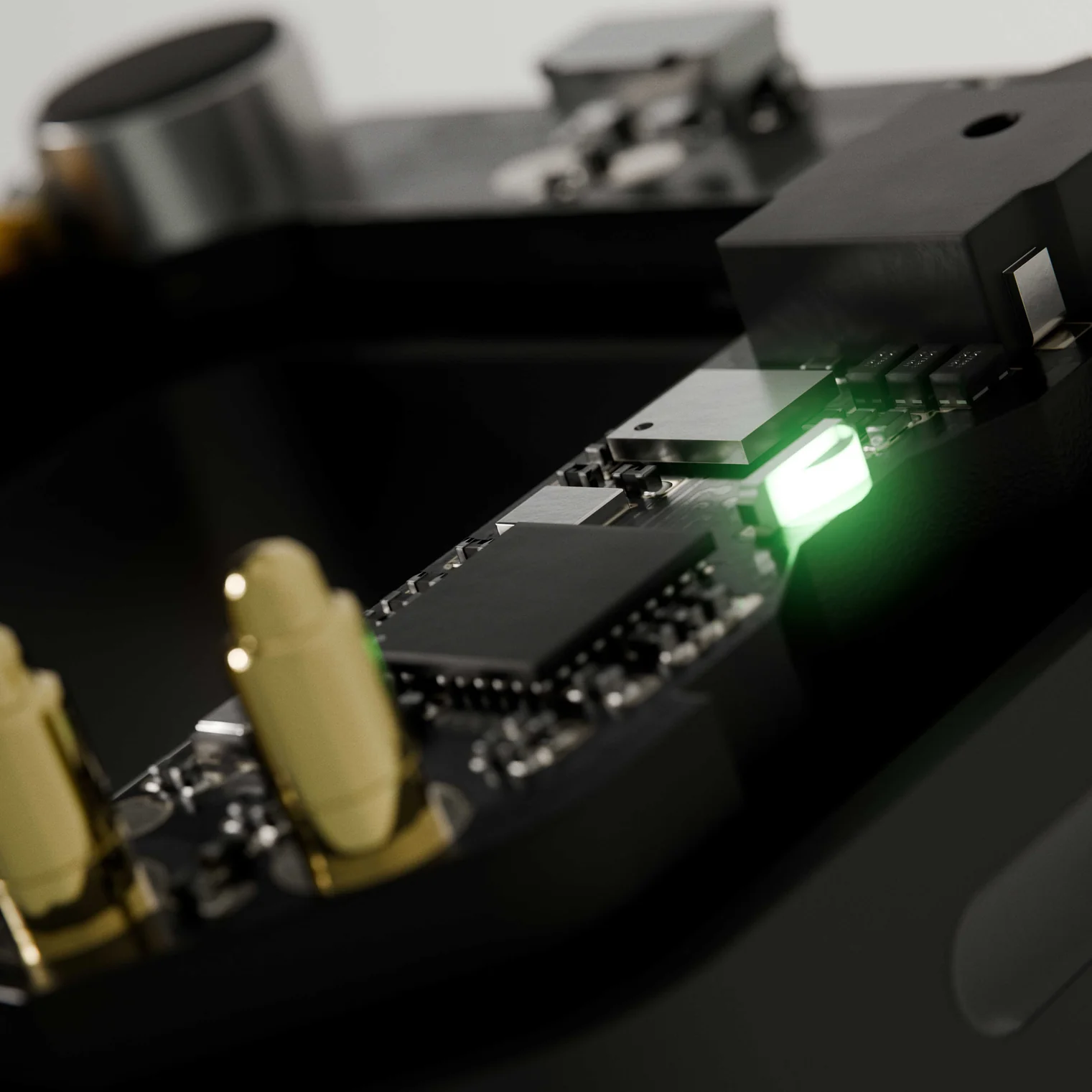
A handful of design choices decide most of the outcome. Antenna and RF design, where poor placement or routing causes interference. PCB grounding and shielding, which is what gets you through EMC. Power supply filtering, because noisy rails turn into emissions. Component selection, since not everything meets RoHS. And the enclosure materials, which affect both safety and RF performance.
An antenna that measures beautifully on the bench can still fail radio certification once the layout around it starts radiating.
So when you're doing IoT product development, weigh compliance next to the hardware, firmware and mechanical design from the start. It's a lot cheaper than discovering a redesign late.
Why pre-compliance testing pays for itself
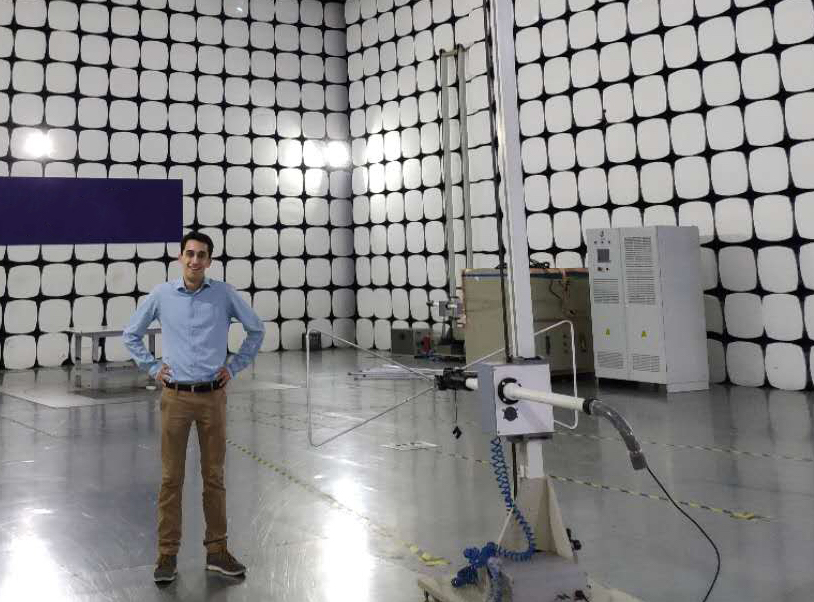
Before paying for official certification, most teams run pre-compliance testing to catch the obvious problems while they're still cheap.
You'd typically scan for unwanted radiated and conducted emissions, check the antenna and transmitter behaviour, and verify the electrical safety basics: isolation, grounding, voltage limits.
Fixing something during development is far easier than fixing it after a failed certification test. On a tight timeline that gap is often the difference between shipping and slipping a quarter.
The technical file
CE also needs a technical file, the paperwork that shows your product complies. It usually holds:
- Circuit schematics and PCB designs
- Product specifications
- Component lists
- Risk assessments
- Compliance test reports
- User guides and labelling details
- The Declaration of Conformity
You keep that file for ten years after the product goes on the market, because regulators can ask to see it. Build it up as you go instead of reconstructing it at the end and certification gets much less painful.
Certification is not the same as being ready to ship
Passing certification is a milestone, not a launch. Manufacturing brings its own problems.
Factories are tuned for throughput, and throughput and consistency pull against each other. To hold quality across a run you want an approved component list so nobody substitutes parts, a production test fixture for every device, and a pilot run before you scale manufacturing.
Skip those and a perfectly certified design can still turn into unreliable units in the field.
Planning for updates and scale
It's easy to pour everything into the hardware and forget the product has a life after launch.
Connected devices need firmware updates, security patches and new features. Build in over-the-air updates and you can deliver all of that remotely, without recalling anything.
The backend has to scale too. A system that's fine for a handful of prototypes can fall over at a few thousand devices. Planning for that during development costs far less than re-architecting it once the units are out there.
How we work
A connected device is more than working hardware. You're juggling hardware design, firmware development, compliance testing and manufacturing prep at the same time.
We work across that whole span: flagging the standards that apply early, designing the hardware with certification in mind, lining up pre-compliance testing, and assembling the technical file. Treating compliance, engineering and manufacturing as one job rather than three handovers is what keeps the path from prototype to production short.
The short version
Getting from prototype to certified production takes more than a device that works. You need to know which rules apply, prepare the documentation, run the right tests, and hold quality steady across a production run.
Bring certification in early and the whole thing becomes predictable. Leave it to the end and you're usually looking at several rounds of redesign.
Frequently asked questions
Do IoT devices need CE certification before they can be sold in Europe?
Yes. Any IoT device sold in the European Economic Area needs it. It confirms the device meets EU rules on safety, electromagnetic compatibility and hazardous substances.
How long does CE certification take for an IoT product?
Usually 4 to 12 weeks, depending on how complex the device is and how much testing it needs across EMC, radio and electrical safety.
What testing is required?
For most IoT devices: EMC testing, radio testing, electrical safety checks and RoHS verification.
Can a startup get CE certification on its own?
Yes. You complete the required testing, prepare the technical documentation, and sign the Declaration of Conformity yourself. Nobody else issues it to you.
How much does CE certification cost for an IoT device?
It depends on the device, how many directives apply, and how much lab time the testing needs. A battery-powered BLE sensor and a mains-connected gateway are not in the same bracket. Ask us for a figure against your actual product.
'%3e%3cpath%20d='M0.512578%2012.7977C0.512016%2014.8142%201.04302%2016.7831%202.0527%2018.5185L0.416016%2024.448L6.53152%2022.857C8.22299%2023.7706%2010.1181%2024.2494%2012.044%2024.2495H12.0491C18.4067%2024.2495%2023.582%2019.1162%2023.5847%2012.8067C23.586%209.74933%2022.3871%206.87435%2020.2089%204.71138C18.0311%202.54858%2015.1347%201.35686%2012.0486%201.35547C5.6902%201.35547%200.515297%206.48849%200.512672%2012.7977'%20fill='url(%23paint0_linear_1455_10349)'/%3e%3cpath%20d='M0.100313%2012.7941C0.0996563%2014.8831%200.649687%2016.9224%201.69537%2018.72L0%2024.8621L6.33478%2023.214C8.08022%2024.1582%2010.0454%2024.6561%2012.0451%2024.6568H12.0502C18.636%2024.6568%2023.9972%2019.3389%2024%2012.8035C24.0011%209.63629%2022.7591%206.65796%2020.5031%204.4175C18.2468%202.17731%2015.2468%200.942709%2012.0502%200.941406C5.46337%200.941406%200.102938%206.25862%200.100313%2012.7941ZM3.87291%2018.4104L3.63637%2018.0379C2.64206%2016.4691%202.11725%2014.6563%202.118%2012.7948C2.12006%207.36271%206.57544%202.94327%2012.054%202.94327C14.7071%202.94438%2017.2005%203.97062%2019.0759%205.83257C20.9512%207.69471%2021.9831%2010.1701%2021.9824%2012.8028C21.98%2018.2349%2017.5245%2022.6549%2012.0502%2022.6549H12.0463C10.2638%2022.654%208.51569%2022.179%206.99113%2021.2814L6.62831%2021.0679L2.86912%2022.0459L3.87291%2018.4104Z'%20fill='url(%23paint1_linear_1455_10349)'/%3e%3cpath%20d='M9.06383%207.83911C8.84014%207.34581%208.60473%207.33586%208.39202%207.32721C8.21783%207.31976%208.0187%207.32032%207.81977%207.32032C7.62064%207.32032%207.29711%207.39465%207.02364%207.69093C6.74989%207.98748%205.97852%208.70414%205.97852%2010.1617C5.97852%2011.6193%207.04848%2013.028%207.19764%2013.2259C7.34698%2013.4234%209.26323%2016.5103%2012.2981%2017.6978C14.8204%2018.6847%2015.3336%2018.4884%2015.881%2018.4389C16.4285%2018.3896%2017.6477%2017.7225%2017.8964%2017.0306C18.1453%2016.3389%2018.1453%2015.746%2018.0707%2015.6221C17.996%2015.4986%2017.7969%2015.4245%2017.4983%2015.2764C17.1997%2015.1283%2015.7317%2014.4115%2015.458%2014.3126C15.1843%2014.2138%2014.9853%2014.1645%2014.7861%2014.4612C14.587%2014.7573%2014.0152%2015.4245%2013.841%2015.6221C13.6669%2015.8201%2013.4926%2015.8448%2013.1941%2015.6966C12.8953%2015.5479%2011.9337%2015.2355%2010.7929%2014.2263C9.90523%2013.441%209.30598%2012.4712%209.1318%2012.1746C8.95761%2011.8784%209.11314%2011.7178%209.26286%2011.5702C9.39702%2011.4374%209.56155%2011.2242%209.71098%2011.0513C9.85986%2010.8783%209.90955%2010.7548%2010.0091%2010.5573C10.1088%2010.3595%2010.0589%2010.1865%209.98436%2010.0383C9.90955%209.89009%209.32933%208.42488%209.06383%207.83911Z'%20fill='white'/%3e%3c/g%3e%3cdefs%3e%3clinearGradient%20id='paint0_linear_1455_10349'%20x1='1158.85'%20y1='2310.61'%20x2='1158.85'%20y2='1.35547'%20gradientUnits='userSpaceOnUse'%3e%3cstop%20stop-color='%231FAF38'/%3e%3cstop%20offset='1'%20stop-color='%2360D669'/%3e%3c/linearGradient%3e%3clinearGradient%20id='paint1_linear_1455_10349'%20x1='1200'%20y1='2393.01'%20x2='1200'%20y2='0.941406'%20gradientUnits='userSpaceOnUse'%3e%3cstop%20stop-color='%23F9F9F9'/%3e%3cstop%20offset='1'%20stop-color='white'/%3e%3c/linearGradient%3e%3cclipPath%20id='clip0_1455_10349'%3e%3crect%20width='24'%20height='24'%20fill='white'%20transform='translate(0%200.941406)'/%3e%3c/clipPath%3e%3c/defs%3e%3c/svg%3e)