Custom wireless sensor development
Environmental and industrial sensor platforms that run unattended for years — solar-powered where needed, connected over LoRaWAN, NB-IoT or cellular, with the data platform included.
Useful sensor data is harder than it looks: sensing elements drift, enclosures fog up, batteries die in winter and connectivity fails exactly where you need measurements most. A sensor network only pays off when every node keeps reporting trustworthy numbers without somebody driving out to reset it.
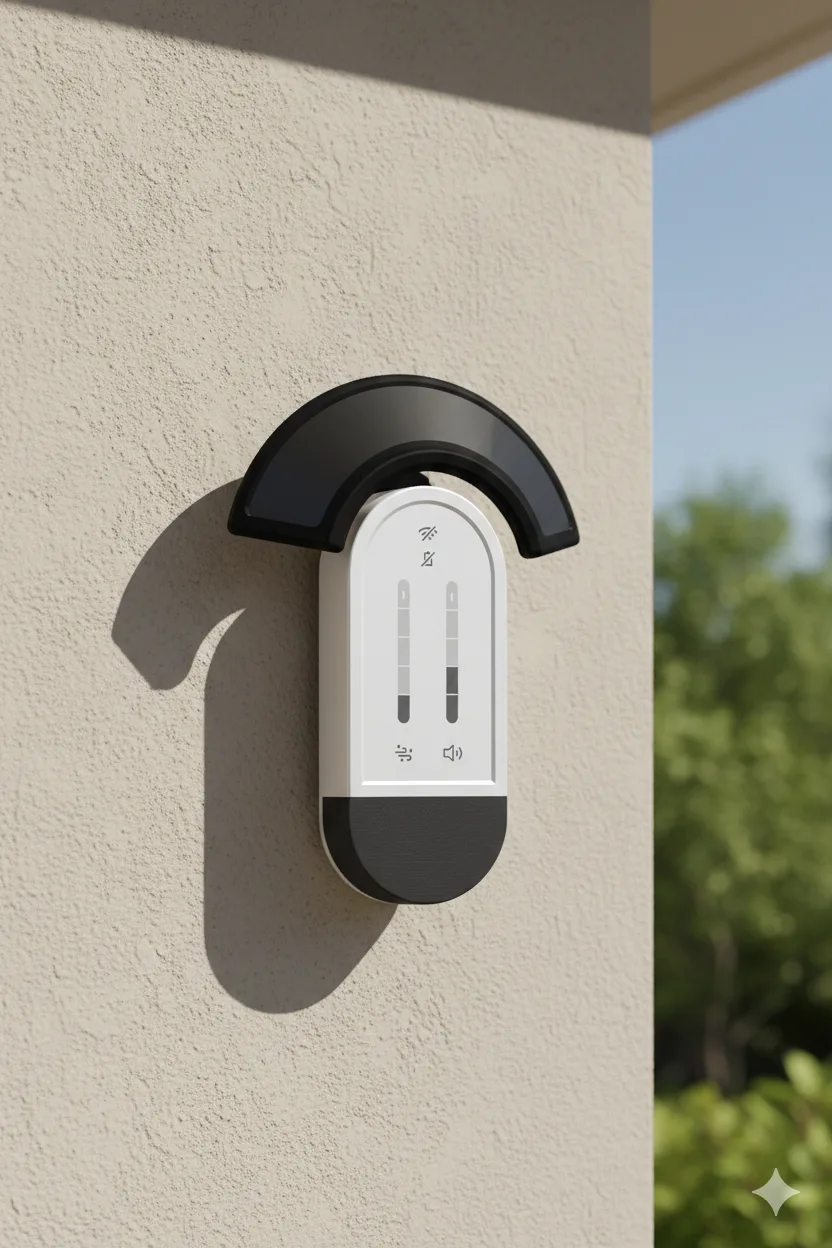
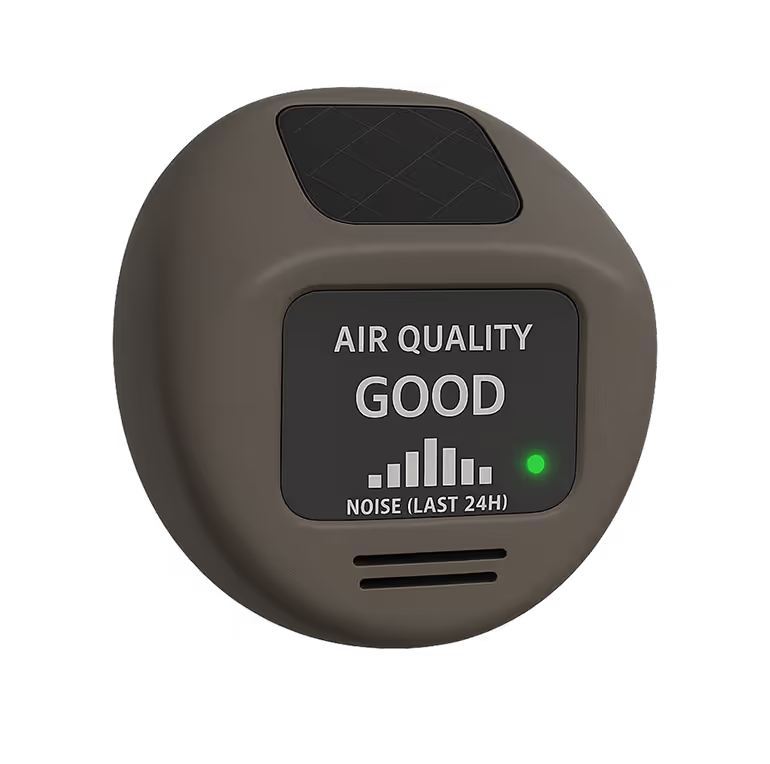
That is the standard we design to. MedeMeter measures air quality and noise from a solar-powered platform with cellular backhaul and AI analytics; Spark monitors off-grid solar installations in the field. From sensing element to dashboard, one team owns calibration, power, connectivity and the data pipeline.
What we build
Environmental & industrial sensing
Air quality, noise, climate, energy and condition monitoring — sensor selection, calibration strategy and signal conditioning matched to the accuracy you actually need.
Long-range wireless
LoRaWAN, NB-IoT, LTE-M or BLE chosen per site and payload, with RF design and antenna integration validated in the field, not just simulated.
Energy-autonomous design
Solar harvesting and battery systems engineered for years of unattended operation — including Dutch winters, when the sun barely cooperates.
Data platform & edge AI
Cloud ingestion, dashboards and on-device intelligence: from anomaly detection at the edge to fleet-wide analytics, built on Azure.
How a sensor project runs
Sensing requirements & feasibility
Which quantities, what accuracy, which environment. We validate the critical sensing question early, before committing to a platform.
Prototype & calibration
First nodes measured against reference instruments, with a calibration strategy that handles drift and cross-sensitivity from the start.
Field pilot
A small fleet in the real environment: enclosure behaviour, energy balance and data quality proven across weather and seasons.
Certification
CE with the Radio Equipment Directive for the chosen radio, plus environmental ratings your deployment demands.
Fleet production & monitoring
DFM, test fixtures, provisioning and yield tracking via Insyght Console — the same platform then monitors your fleet in the field.
Frequently asked questions
What kinds of sensors can you develop?
Environmental and industrial monitoring platforms: air quality, noise, climate, energy and condition monitoring, among others. MedeMeter — our solar-powered air-quality and noise platform with cellular backhaul and AI analytics — shows the full scope: sensing, autonomy, connectivity and analytics in one product.
How do you make sensors run unattended for years?
Energy autonomy is engineered, not hoped for: solar harvesting sized for dark winters, battery chemistry chosen for the temperature range, firmware that degrades gracefully when power runs low, and connectivity that retries intelligently instead of draining the node.
How do you handle calibration and accuracy?
We define the required accuracy up front, select sensing elements accordingly, and validate against reference instruments during field pilots. Drift and cross-sensitivity are handled in the calibration strategy rather than discovered by your customers.
Which connectivity should a sensor network use?
LoRaWAN when you control the site and payloads are small; NB-IoT or LTE-M for public coverage without your own gateways; BLE for local readout. We choose per site and payload — and have shipped cellular, LoRa and BLE designs.
Can you go from a pilot to a full fleet?
Yes. The platform that runs a ten-node pilot scales to production: DFM review, test fixtures, provisioning and yield tracking via Insyght Console, with manufacturing managed from pilot to volume.
We needed a way to get data from solar systems in off grid villages into our cloud. Not exactly a friendly environment to design for. Power is unreliable, conditions are tough, connectivity is limited at best. Insyght moved fast and delivered a solution that just works, with solid Bluetooth connectivity and no unnecessary complexity.

Planning a sensor deployment?
Free 30-minute consult on sensing, autonomy and connectivity — with lessons from MedeMeter and Spark included.
'%3e%3cpath%20d='M0.512578%2012.7977C0.512016%2014.8142%201.04302%2016.7831%202.0527%2018.5185L0.416016%2024.448L6.53152%2022.857C8.22299%2023.7706%2010.1181%2024.2494%2012.044%2024.2495H12.0491C18.4067%2024.2495%2023.582%2019.1162%2023.5847%2012.8067C23.586%209.74933%2022.3871%206.87435%2020.2089%204.71138C18.0311%202.54858%2015.1347%201.35686%2012.0486%201.35547C5.6902%201.35547%200.515297%206.48849%200.512672%2012.7977'%20fill='url(%23paint0_linear_1455_10349)'/%3e%3cpath%20d='M0.100313%2012.7941C0.0996563%2014.8831%200.649687%2016.9224%201.69537%2018.72L0%2024.8621L6.33478%2023.214C8.08022%2024.1582%2010.0454%2024.6561%2012.0451%2024.6568H12.0502C18.636%2024.6568%2023.9972%2019.3389%2024%2012.8035C24.0011%209.63629%2022.7591%206.65796%2020.5031%204.4175C18.2468%202.17731%2015.2468%200.942709%2012.0502%200.941406C5.46337%200.941406%200.102938%206.25862%200.100313%2012.7941ZM3.87291%2018.4104L3.63637%2018.0379C2.64206%2016.4691%202.11725%2014.6563%202.118%2012.7948C2.12006%207.36271%206.57544%202.94327%2012.054%202.94327C14.7071%202.94438%2017.2005%203.97062%2019.0759%205.83257C20.9512%207.69471%2021.9831%2010.1701%2021.9824%2012.8028C21.98%2018.2349%2017.5245%2022.6549%2012.0502%2022.6549H12.0463C10.2638%2022.654%208.51569%2022.179%206.99113%2021.2814L6.62831%2021.0679L2.86912%2022.0459L3.87291%2018.4104Z'%20fill='url(%23paint1_linear_1455_10349)'/%3e%3cpath%20d='M9.06383%207.83911C8.84014%207.34581%208.60473%207.33586%208.39202%207.32721C8.21783%207.31976%208.0187%207.32032%207.81977%207.32032C7.62064%207.32032%207.29711%207.39465%207.02364%207.69093C6.74989%207.98748%205.97852%208.70414%205.97852%2010.1617C5.97852%2011.6193%207.04848%2013.028%207.19764%2013.2259C7.34698%2013.4234%209.26323%2016.5103%2012.2981%2017.6978C14.8204%2018.6847%2015.3336%2018.4884%2015.881%2018.4389C16.4285%2018.3896%2017.6477%2017.7225%2017.8964%2017.0306C18.1453%2016.3389%2018.1453%2015.746%2018.0707%2015.6221C17.996%2015.4986%2017.7969%2015.4245%2017.4983%2015.2764C17.1997%2015.1283%2015.7317%2014.4115%2015.458%2014.3126C15.1843%2014.2138%2014.9853%2014.1645%2014.7861%2014.4612C14.587%2014.7573%2014.0152%2015.4245%2013.841%2015.6221C13.6669%2015.8201%2013.4926%2015.8448%2013.1941%2015.6966C12.8953%2015.5479%2011.9337%2015.2355%2010.7929%2014.2263C9.90523%2013.441%209.30598%2012.4712%209.1318%2012.1746C8.95761%2011.8784%209.11314%2011.7178%209.26286%2011.5702C9.39702%2011.4374%209.56155%2011.2242%209.71098%2011.0513C9.85986%2010.8783%209.90955%2010.7548%2010.0091%2010.5573C10.1088%2010.3595%2010.0589%2010.1865%209.98436%2010.0383C9.90955%209.89009%209.32933%208.42488%209.06383%207.83911Z'%20fill='white'/%3e%3c/g%3e%3cdefs%3e%3clinearGradient%20id='paint0_linear_1455_10349'%20x1='1158.85'%20y1='2310.61'%20x2='1158.85'%20y2='1.35547'%20gradientUnits='userSpaceOnUse'%3e%3cstop%20stop-color='%231FAF38'/%3e%3cstop%20offset='1'%20stop-color='%2360D669'/%3e%3c/linearGradient%3e%3clinearGradient%20id='paint1_linear_1455_10349'%20x1='1200'%20y1='2393.01'%20x2='1200'%20y2='0.941406'%20gradientUnits='userSpaceOnUse'%3e%3cstop%20stop-color='%23F9F9F9'/%3e%3cstop%20offset='1'%20stop-color='white'/%3e%3c/linearGradient%3e%3cclipPath%20id='clip0_1455_10349'%3e%3crect%20width='24'%20height='24'%20fill='white'%20transform='translate(0%200.941406)'/%3e%3c/clipPath%3e%3c/defs%3e%3c/svg%3e)